
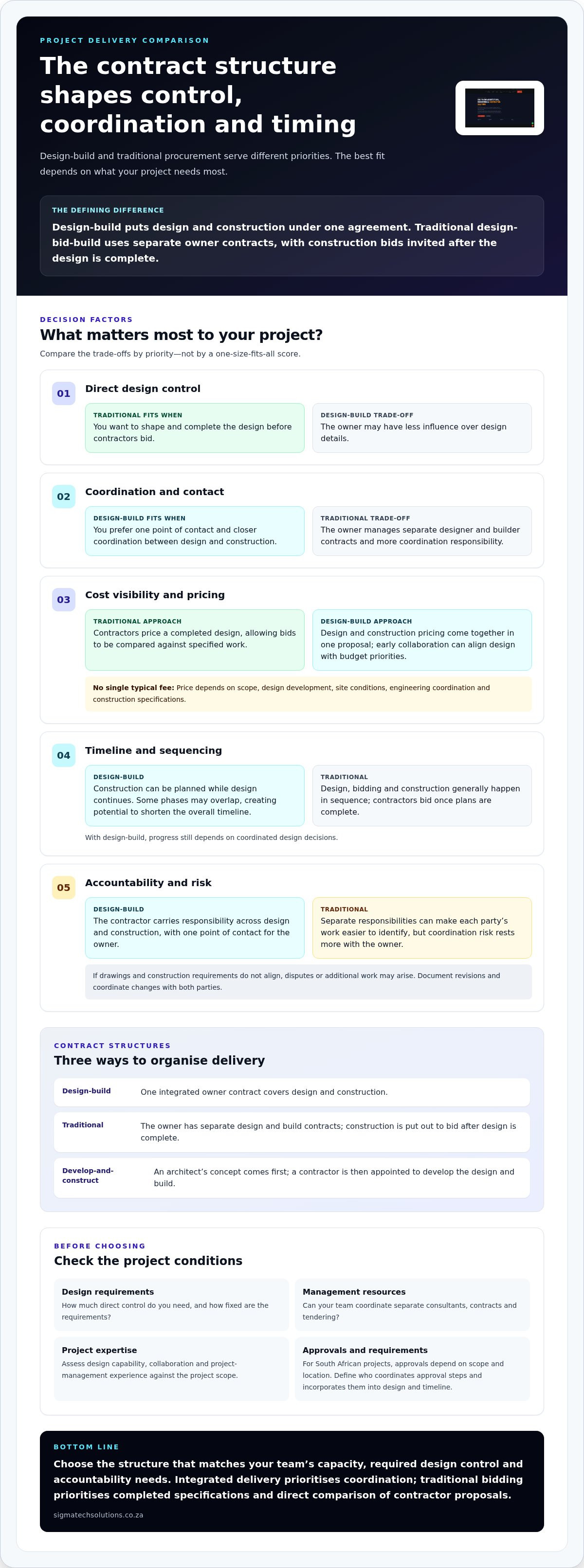
The integrated route is not automatically the right choice. In a design-build vs traditional construction comparison, the defining difference is the contract: design-build places design and construction under one agreement, while traditional design-bid-build uses separate owner contracts and puts construction out to bid after the design is complete. That choice affects who coordinates the work, how much design control you retain and when construction can be planned.
Both approaches can suit South African projects, but they meet different priorities. If you want to shape the design closely and compare construction bids against completed plans, traditional procurement may fit. If a single point of responsibility and close coordination between design and construction matter more, design-build may be a better match.
This article explains how each route works, what traditional contracts offer and the trade-offs to weigh around cost, timing, accountability and design flexibility. Use the comparison and decision guide to identify the procurement structure that aligns with your project requirements.
Key Takeaways
- Match the contract structure to your priorities: integrated coordination and a single point of responsibility, or greater direct control over design and tendering.
- Assess how fixed your design requirements are before choosing a route, especially if you expect changes as the project develops.
- Compare how each approach handles accountability, communication and risk so you know where coordination responsibilities sit.
- Use the decision guide to weigh project expertise, available resources and procurement requirements before selecting a delivery model.
What is Design-Build Construction?
Choosing a project delivery method means deciding how design expertise, construction responsibility, owner control and contracting will be organised.
For a South African project, applicable approvals depend on its scope and location, not simply its procurement route. Define who coordinates approval steps and incorporates their requirements into the design and timeline.
Design-Build Contract Structures
In design-and-build, the owner signs one contract with an entity responsible for both design and construction. Design-and-construct describes a similar integrated structure, where the appointed contractor develops the design and delivers the build. By contrast, develop-and-construct can begin with an architect’s concept, followed by a contractor developing and building from it.
Owner Control and Contractor Responsibilities
With design-build, architects and engineers typically work for the design-builder, giving the owner one point of contact and creating the potential for streamlined coordination. The contractor carries responsibility across both phases, but the owner may have less influence over design details. Traditional procurement lets owners shape and complete the design before contractors bid, supporting direct comparison of proposed costs and expertise.
| Option | Contract structure | Owner control | Contractor responsibility |
|---|---|---|---|
| Design-build | One integrated contract | Less direct during design | Design and construction |
| Traditional | Separate design and build contracts | Greater before tender | Construction delivery |
| Develop-and-construct | Concept, then contractor appointment | Shapes initial concept | Develops design and builds |
Choose based on your team’s resources, required design control and capacity to manage separate contracts. Integrated delivery can suit owners seeking closer coordination; traditional bidding can fit projects where completed specifications and competitive contractor proposals guide selection. Match the structure to the expertise and accountability your project needs.
Choosing a procurement route based on project priorities
For a large construction project, compare your design priorities, available management resources, cost visibility and required timeline. The right project delivery method depends on which trade-offs your team can manage.
Design-Build Procurement
Choose an integrated team when one coordinated process suits your vision and delivery requirements. In South Africa, assess design capability, collaboration and project-management experience against the project scope. The process typically moves from defining requirements to developing and coordinating the design, planning construction and delivering the build. This approach brings architects and contractors into one delivery structure rather than separate appointments.
Separate Architect and Builder Procurement
Appoint an architect and builder separately when your project requires close owner direction during design. The architect develops the plans first; contractors then price the specified work. This sequence can suit a client with internal resources to coordinate consultants and tendering. It also lets the owner compare construction bids against a completed design, rather than committing earlier to an integrated proposal.
Integrated and Sequential Timelines
Design-build teams can plan construction while design work continues, so some construction phases may overlap. This creates the potential to shorten the overall timeline, though progress still depends on coordinated design decisions. Traditional delivery generally sequences design, bidding and construction. Contractors cannot bid on completed plans until the design is ready, making the phases more distinct.
Project Costs and Fees
There is no single typical South African fee for either route: price depends on scope, design development, site conditions, engineering coordination and construction specifications, and is given after a quote request. Traditional procurement separates design fees from contractor bids, making the specified work easier to price competitively. Design-build brings design and construction pricing into one proposal, with early collaboration helping align the design with budget priorities.
Choose the structure that fits your team’s capacity to coordinate design, tendering and construction. For projects with complex steel interfaces, structural steel and process piping can form part of the coordinated scope.
What are the pros of a traditional contract?
Traditional contracts separate design from construction, creating distinct responsibilities and review points. This structure can help owners trace design decisions, construction performance and accountability through project completion.
Traditional Contract Risk Allocation
Under traditional procurement, the owner manages separate contracts with the designer and builder, so more coordination risk rests with the owner. The designer develops the plans, and contractors price the completed scope. This separation makes each party’s work easier to identify, but it can expose the owner to disputes when drawings and construction requirements do not align.
Design changes create a specific risk point. If a drawing discrepancy emerges during construction, the contractor may face additional work or cost, while the owner may need to coordinate a response between designer and builder. Set out approval steps, document revisions and communicate each change to both parties before work proceeds.
Traditional Contract Accountability
Separate appointments can make it clearer whether an issue arose in design or construction. For example, a mismatch between specified materials and installed work can be assessed against the designer’s documents and the contractor’s completed work. In design-build, both responsibilities sit with one entity, which may make accountability harder to assign when a problem occurs.
That clarity comes with a management cost. The owner often acts as the communication link between the architect and build team, resolving misalignment before it affects completion. For a project with fixed requirements, this oversight can support direct review of design decisions and competitive tendering. However, it takes time and resources and does not remove the owner’s coordination role.
Traditional procurement also gives the owner a defined design to assess before selecting a contractor. This can support careful comparison of bids and expertise, particularly when the scope is established. The trade-off is that contractors have limited influence during design, which can restrict early value engineering and make construction changes harder to resolve efficiently. A faster project is therefore not the method’s primary advantage; its strength is clearer separation of design and construction roles.
Design-build and traditional construction comparison
Compare the build method against the decisions your project team must control. For a large South African development, the key differences are contract structure, coordination, design influence, tendering and change management.
| Option | Coordination | Owner influence | Selection and delivery |
|---|---|---|---|
| Design-build | One entity integrates design and construction | Design details are shaped with the integrated team | One proposal; phases may overlap |
| Traditional design-bid-build | Owner coordinates designer and builder | Greater influence before tender | Complete design, then competitive bids |
| Develop-and-construct | Concept designer and contractor work in sequence | Owner establishes the initial concept | Contractor develops and builds from concept |
Design-build’s main advantages are coordinated decisions and a single point of responsibility. Early collaboration lets builders contribute to material and construction-method choices while architects develop the design. This can help align scope and budget, and overlapping work may support a shorter timeline. The challenge is reduced separation between designer and builder, with less independent checking within the delivery team.
Traditional procurement separates the designer’s role from the contractor’s. Owners can assess the completed design before tender and compare bids for specified work. This structure supports direct design oversight and distinct responsibilities, but the owner must manage communication across contracts. If drawings and site work diverge, resolving the issue can involve both parties and affect changes or costs.
For example, a facility with fixed specifications and a priority on comparing contractor bids may favour traditional tendering. A project with interfaces that need continuous coordination may benefit from integrated collaboration. Neither method removes project risk; each assigns coordination and decision-making differently.
Choose by ranking your non-negotiables: design control, competitive pricing, coordination capacity, change flexibility and delivery sequence. Then match the contract to the team resources available to manage those priorities. Discuss your project delivery requirements as you assess the procurement route.
SIGMATECH Architectural & Engineering Turnkey Solutions: Full Turnkey Solutions
SIGMATECH Architectural & Engineering Turnkey Solutions provides Full Turnkey Solutions for projects that need coordinated design and construction delivery. For a large build, this approach can bring multiple workstreams into a managed scope, while standalone services can address defined requirements within a wider project.
Drawing Office Draughting supports the preparation and coordination of project drawings. Structural Steel & Process Piping addresses key structural and process infrastructure scopes, while 24/7 Plumbing & Emergency Services supports plumbing requirements. The appropriate scope depends on the project’s design, construction priorities and required disciplines.
Consider a turnkey approach when you want integrated delivery across project phases. For a defined steel or piping package, a standalone scope may be more suitable. Contact SIGMATECH Architectural & Engineering Turnkey Solutions to discuss your project requirements.
Set the Project Up for Clear Decisions
Before appointing a team, turn your procurement priorities into a project brief. Define who approves design decisions, how changes are assessed and where coordination sits across project interfaces. For a large build, clear scope boundaries help align structural work, process requirements and construction responsibilities from the outset.
The design-build vs traditional construction decision should support those project controls, not dictate them. Record your preferred level of design input, tendering approach and responsibility for coordination, then use those requirements to shape the contract and delivery plan.
Where the scope calls for integrated delivery, SIGMATECH Architectural & Engineering Turnkey Solutions offers Full Turnkey Solutions. Drawing Office Draughting and Structural Steel & Process Piping can also address defined project requirements.
Contact SIGMATECH Architectural & Engineering Turnkey Solutions to discuss your project scope. A well-defined procurement decision gives your team a practical basis for moving forward.
Frequently Asked Questions
What is Traditional Construction?
Traditional construction is a delivery approach where the owner appoints design professionals and a contractor through separate agreements. The design team prepares project information, while the contractor builds from the issued documents. For example, an owner may appoint an architect to coordinate plans and specifications, then appoint a builder to execute that defined scope. The owner manages the relationship between both parties.
When should you use the traditional procurement method for your project?
Use traditional procurement when you need substantial influence over the design before selecting a builder. It can suit a facility with fixed operational requirements, specialist architectural input or an owner team equipped to coordinate separate appointments. It also gives the owner a completed scope for tender comparison. Before choosing it, assess whether your staff can manage design queries, tender evaluation and communication during construction.
What is the difference between design-build and traditional construction?
In a design-build vs traditional construction comparison, the central difference is how design and construction responsibilities are contracted. Design-build combines them under one delivery entity, while traditional construction separates the designer’s appointment from the builder’s. For a production facility with specialist process layouts, an integrated team coordinates design decisions with buildability, while traditional procurement gives the owner more direct design input before appointing a contractor.
How does the traditional design-bid-build process work?
The process follows an ordered sequence. First, the owner appoints a designer and establishes the project requirements. Next, the design is completed and documented for pricing. Contractors then submit bids against that defined scope, and the owner appoints a builder. During construction, the owner and design team address technical queries and review changes against the issued documents and contract requirements.
What are the pros and cons of design-build compared with traditional construction?
Design-build can simplify coordination because design and construction teams work within one delivery structure, and overlapping tasks may support a shorter schedule. Its trade-off is less direct owner control over design development and fewer independent checks between the parties. Traditional delivery offers clearer separation and more design input before tender, but requires the owner to manage interfaces and resolve misalignment between contracts.
How do design-build and traditional construction compare on cost, timelines and budget certainty?
For a design-build vs traditional construction decision, traditional procurement provides bids based on completed design documents, helping owners compare proposed prices for specified work. Its sequential phases can extend the programme. Design-build teams can coordinate cost decisions during design and may overlap planning with construction, supporting earlier cost alignment and a shorter delivery period. In either route, scope changes, site conditions and design development affect the final budget and schedule.
